Job Overview
Location: Guelph, Ontario
Structure: Two-story detached house
Problem: Raccoon activity in the roof
Service: Humane raccoon removal and wildlife exclusion
Visits: 2
Summary
We responded to reports of raccoon activity in the attic of a two-story home in Guelph. During the inspection, Islam confirmed raccoon activity and identified evidence of bat access through roof ventilation points. A humane removal plan was carried out by locating and safely removing the raccoon babies, installing one-way doors at the active entry points, and securing vulnerable roof vents with galvanized steel cages. A follow-up visit confirmed that all wildlife activity had ceased before the one-way doors were removed and the remaining openings permanently sealed.
Background / Property Context
The property is a two-story detached home with multiple roof vents and a shingled roof system. Roof penetrations and attic access points can become attractive entry locations for wildlife seeking sheltered nesting areas, particularly during the spring birthing season.
Customer Concern
The homeowner reported hearing raccoon activity in the roof and requested an inspection to determine how the animals had entered the attic and to prevent future wildlife access.
Inspection & Findings
Islam completed an exterior roof inspection along with an attic inspection. Active raccoon use of the attic was confirmed, and raccoon babies were located within the nesting area. Additional evidence indicated bat access through separate roof openings that also required exclusion.
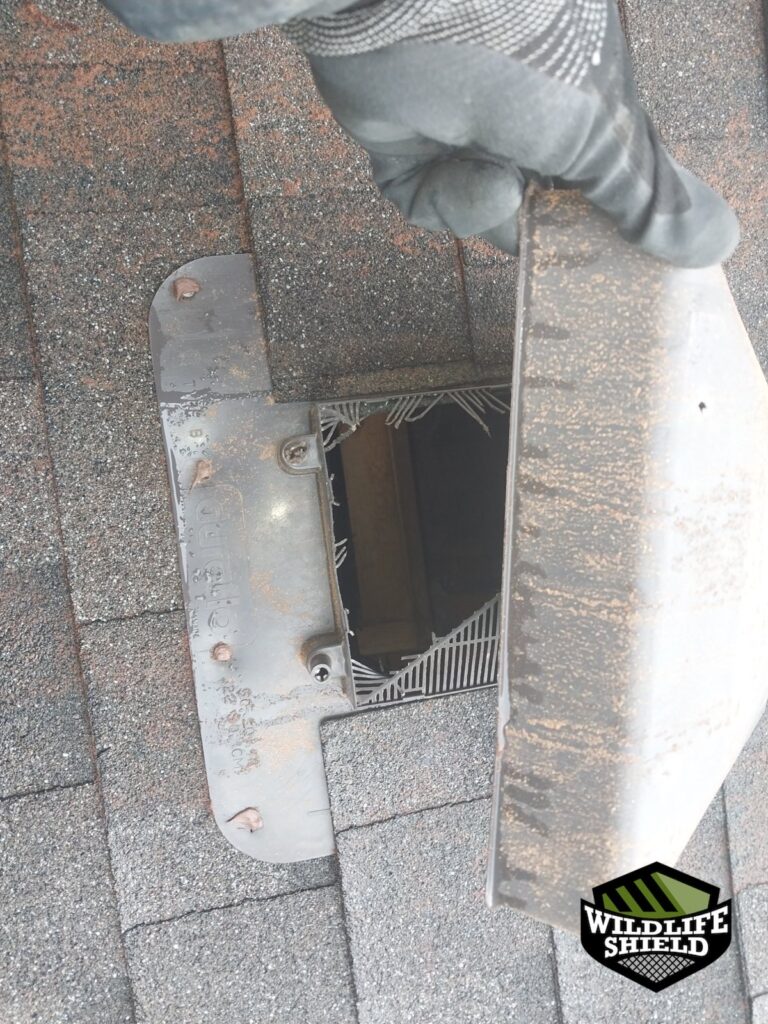
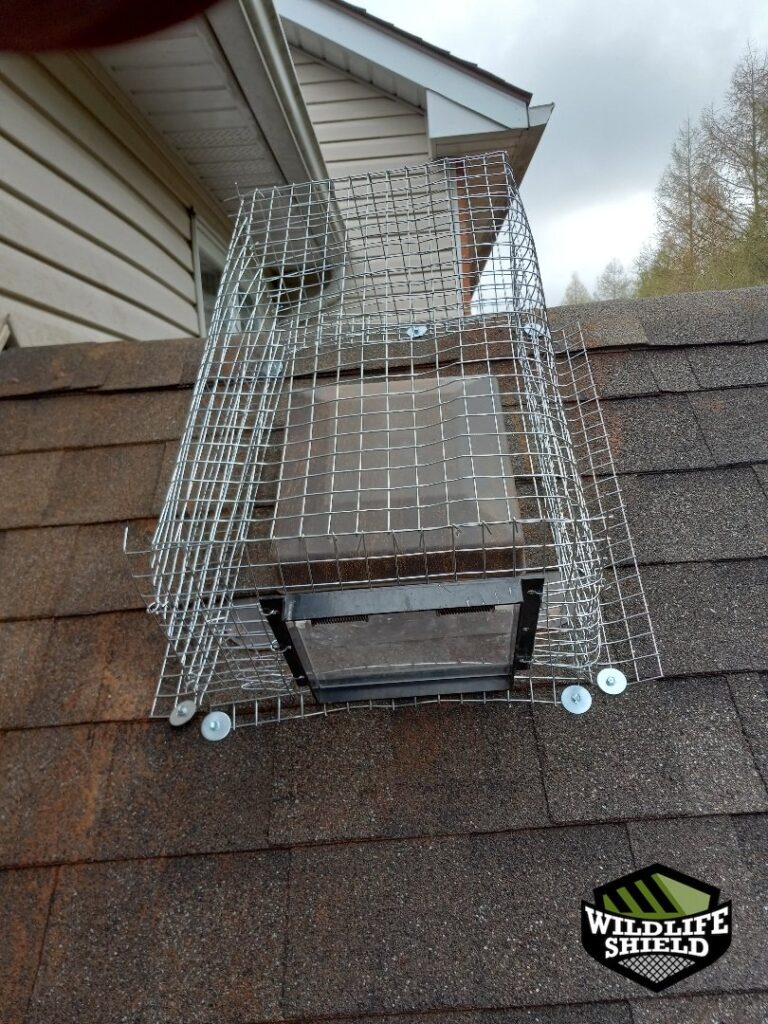
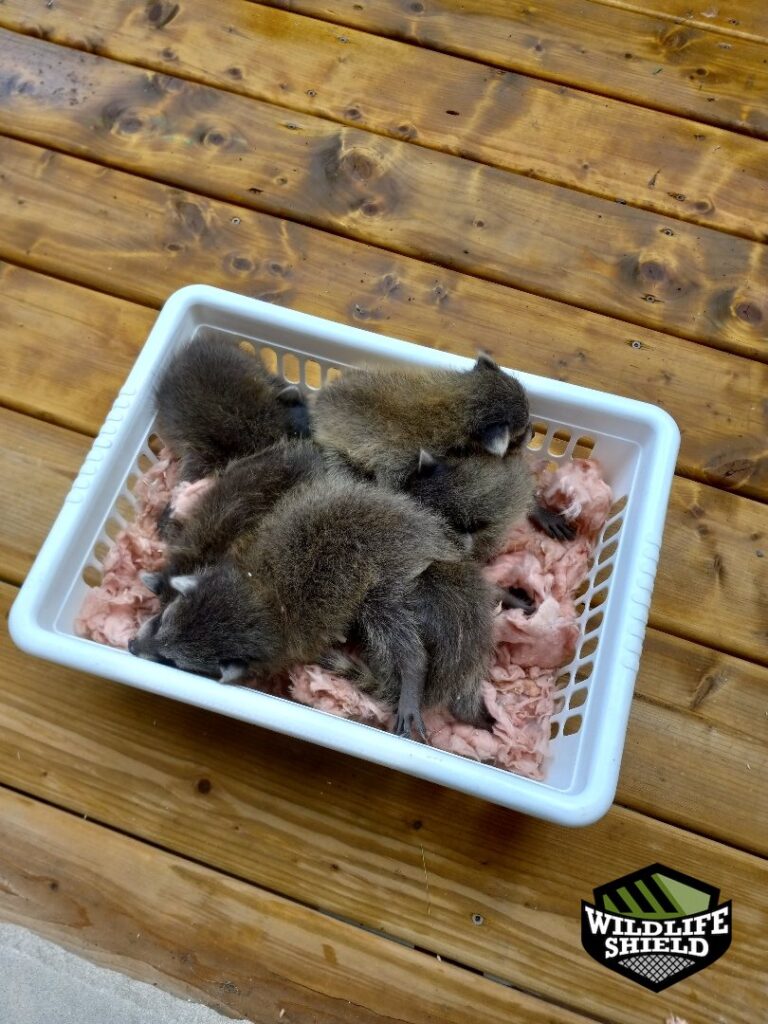
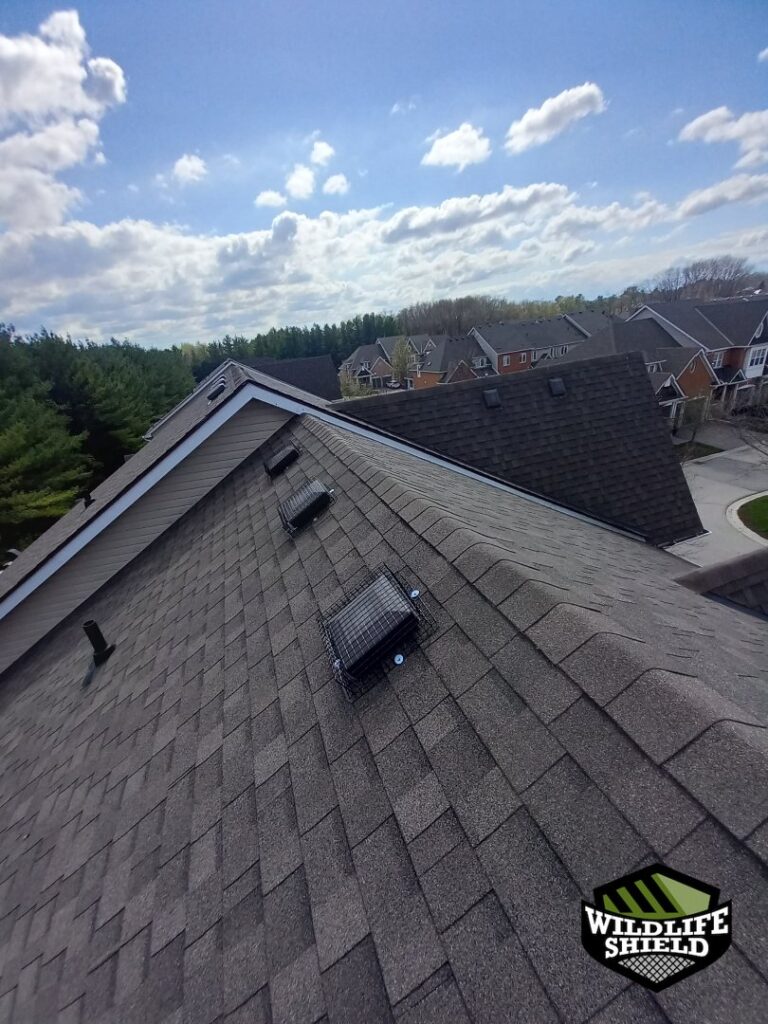
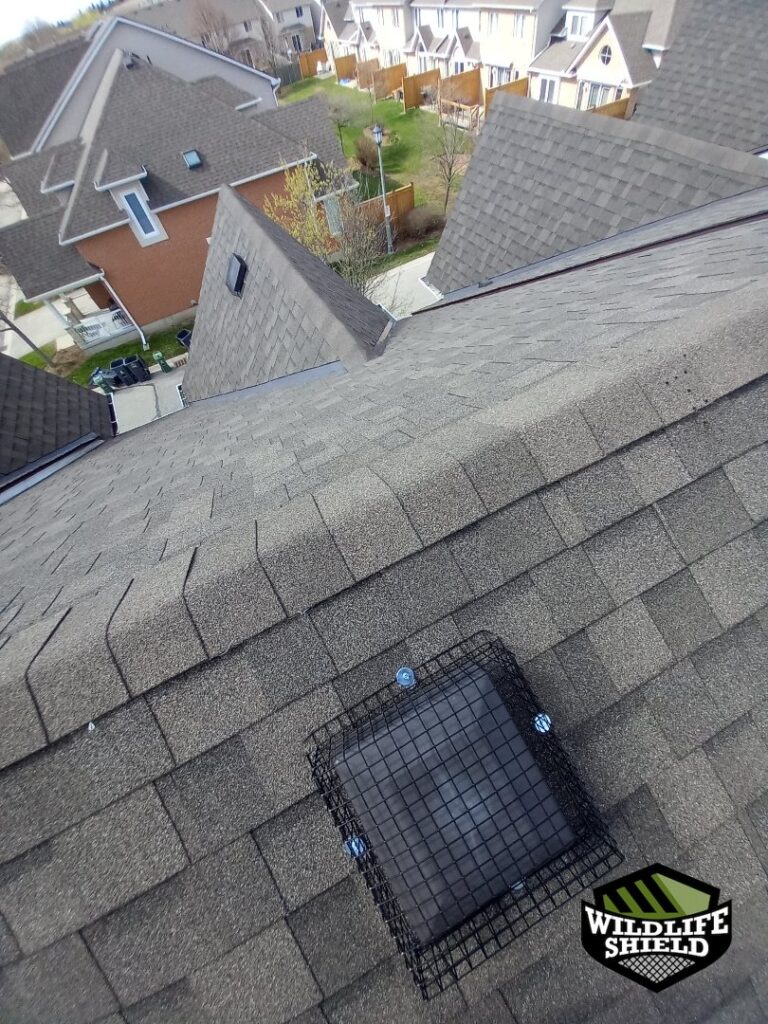
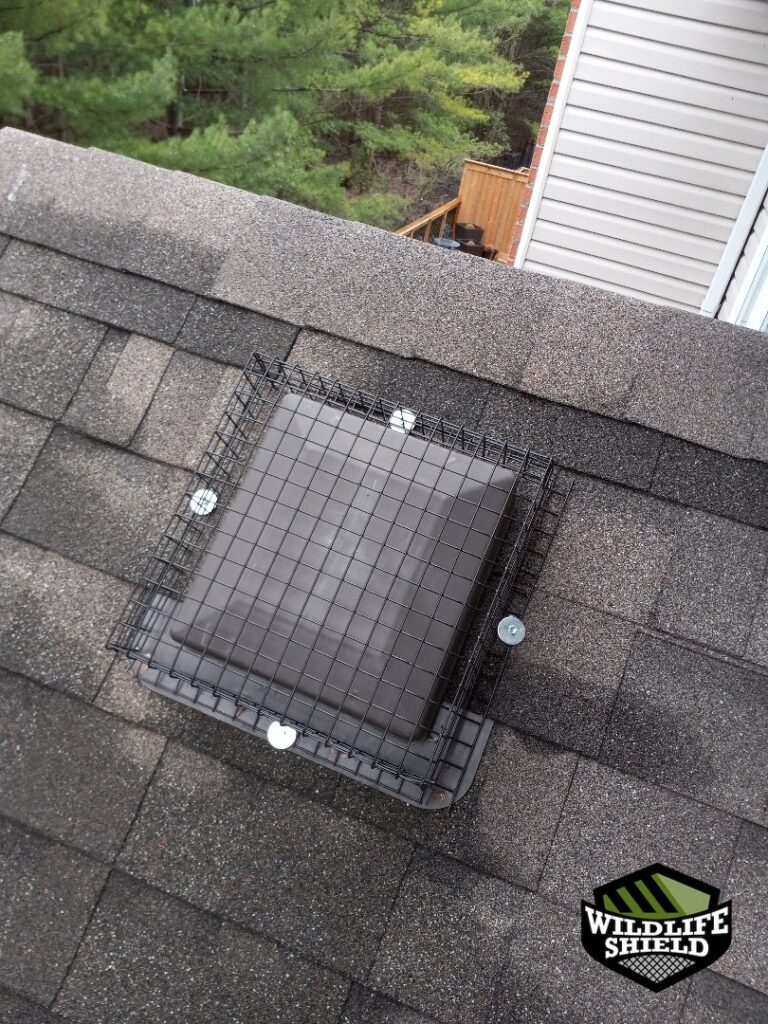
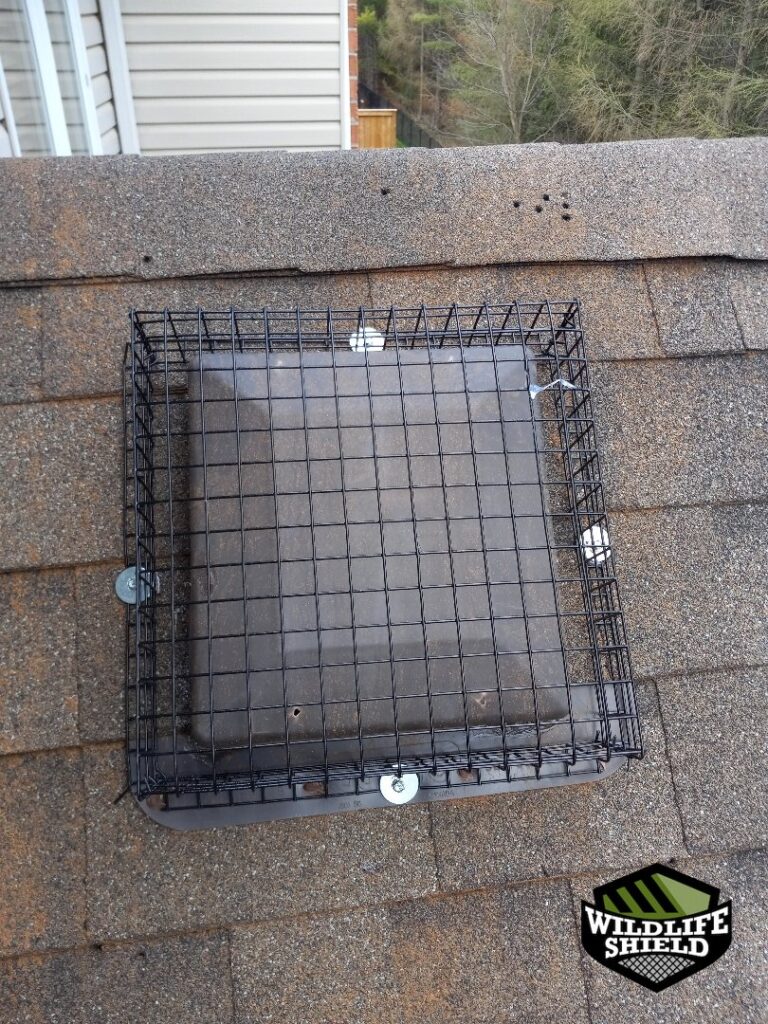
The photographs show raccoon babies placed safely in a temporary reunion container during the removal process, one-way doors installed over active roof entry points, roof vents protected with galvanized steel wildlife cages, and completed roof-level exclusion work. One inspection image also shows an uncovered roof vent opening prior to the installation of protective screening.
Cause Analysis
Raccoons frequently enter attics through vulnerable roof openings, damaged roof vents, or other accessible roof penetrations. Once established, the attic provides a protected nesting environment. Roof vents that are not wildlife-proofed may also provide access opportunities for smaller wildlife species.
Treatment / Removal
During the first visit, Islam confirmed active raccoon occupancy and completed an attic inspection to locate the litter. The raccoon babies were humanely removed from the attic and placed in a protected reunion container near the primary entry point to allow the mother to relocate them naturally.
Two one-way doors were installed at the active entry locations, allowing the adult raccoons to leave the structure while preventing re-entry.
Exclusion & Repairs
Following removal, comprehensive exclusion work was completed, including:
- Installation of two one-way doors at active roof entry points
- Installation of galvanized steel wildlife cages over four roof vents
- Permanent sealing of the primary entry point after wildlife activity had ended
The completed exclusion work reinforced the vulnerable roof penetrations while maintaining proper attic ventilation.
Outcome & Confirmation
During the second visit, the homeowner reported no further sounds or signs of wildlife activity. The one-way doors were removed, the final entry point was permanently sealed, and the completed exclusion work was inspected.
The final inspection confirmed that the roof protection remained secure and no additional wildlife activity was reported.
Technician Notes
Islam confirmed both raccoon and bat activity during the inspection and completed a humane removal process that included locating and safely removing the raccoon babies before installing one-way doors. Protecting the roof vents with galvanized steel cages helped reduce the likelihood of future wildlife access through these vulnerable roof openings.
