Job Overview
Location: Morriston, Ontario
Structure: Split-level detached house, likely built in the 1970s
Problem: Raccoon activity reported in the attic during nighttime hours
Service: Humane raccoon removal, soffit repair, and full roofline wildlife exclusion
Visits: Two visits
Summary
Our team responded to a report of nighttime wildlife activity inside the attic of a split-level home in Morriston. The sounds described by the homeowner were consistent with raccoon movement above the ceiling. During the inspection, the primary entry point was identified at a damaged soffit section along the roofline.
A humane removal strategy was implemented using a one-way raccoon door at the entry location. Additional preventative exclusion work was completed across multiple vulnerable roofline areas including roof vents, soffit intersections, plumbing vents, and roof edge corners. After activity stopped, the one-way door was removed and the entry point was permanently sealed.
Background / Property Context
The structure is a detached split-level home with multiple roofline transitions and soffit intersections typical of homes constructed in the 1970s. These architectural features can create accessible gaps or weaknesses along the roofline where wildlife may attempt entry.
Several roof vents and soffit intersections were present along the eaves, along with plumbing vent penetrations and roof edge corners where animals commonly test for access points.
Customer Concern
The homeowner reported hearing movement and scratching noises in the attic at night. These sounds were intermittent but clearly coming from the roof space above the living areas.
This pattern of activity is commonly associated with raccoons using attic cavities as nesting locations, particularly when young animals are present.
Inspection & Findings
Technician Andrew performed a full exterior inspection of the roofline and attic entry areas.
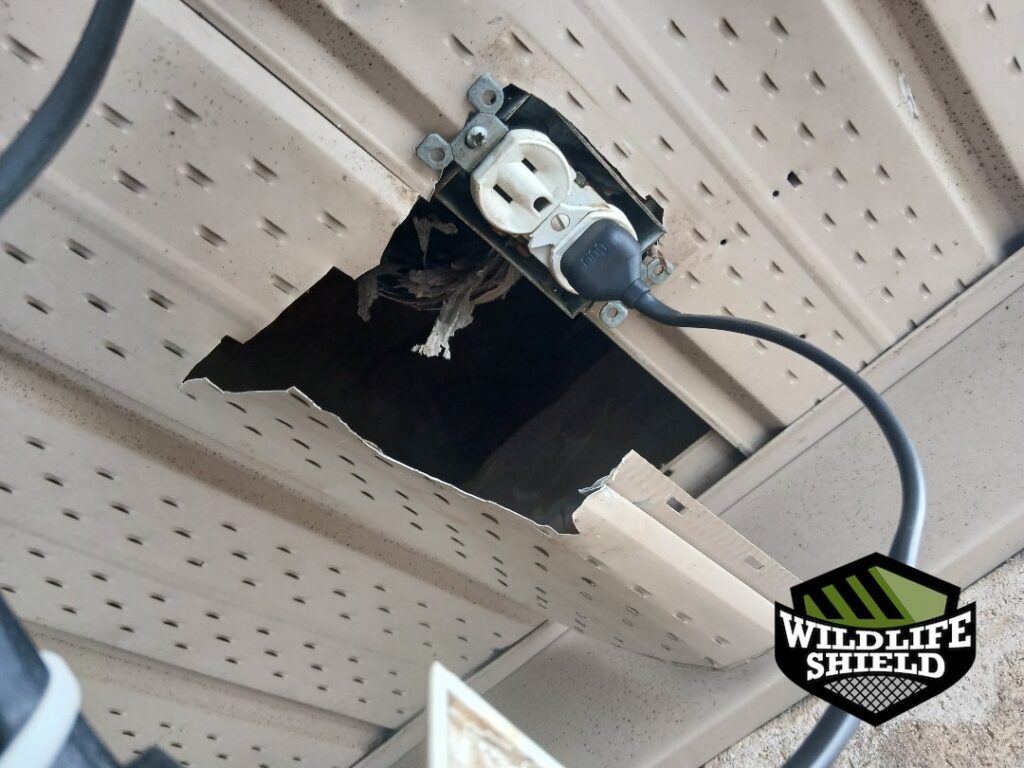
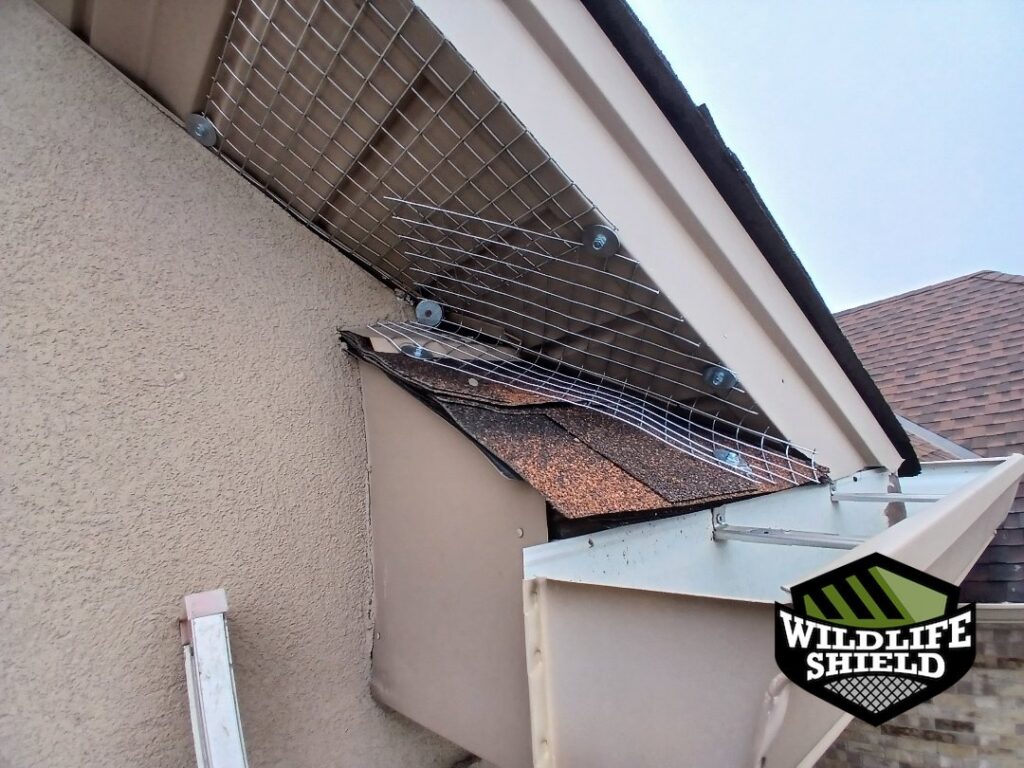
The primary entry point was located at a soffit section where material had been torn downward, creating an opening large enough for raccoons to access the attic space.
Additional vulnerable areas were identified around roof vents, soffit intersections, plumbing vent penetrations, and roof edge transitions. These areas did not necessarily show active entry but represented common wildlife access points requiring reinforcement.
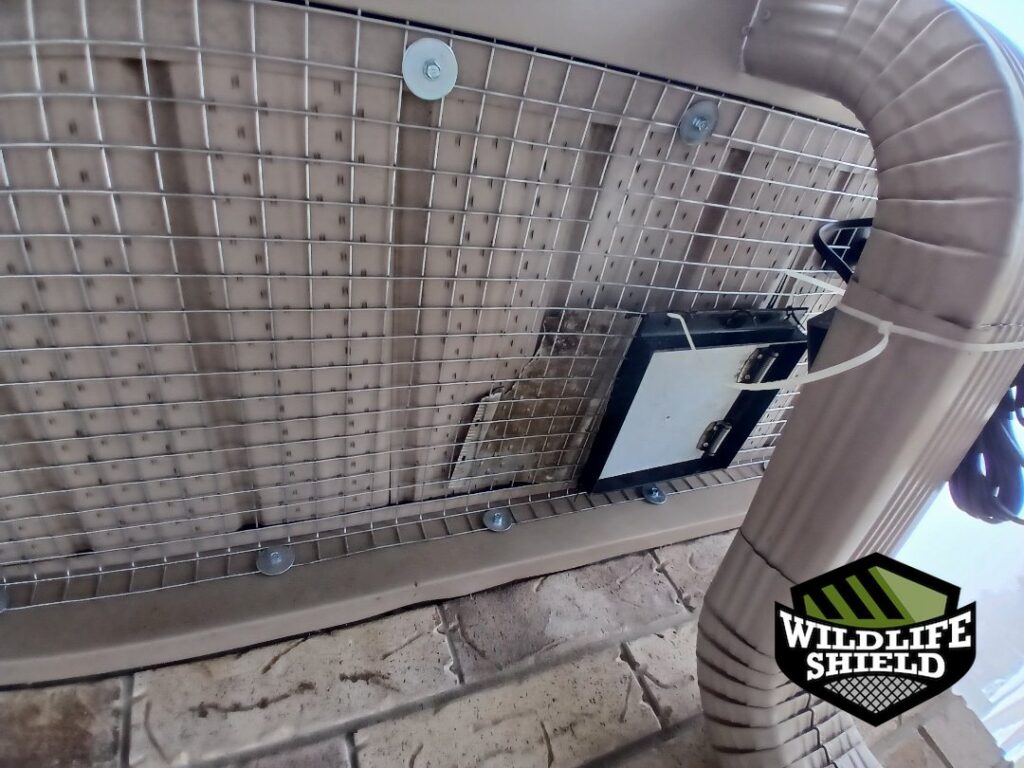
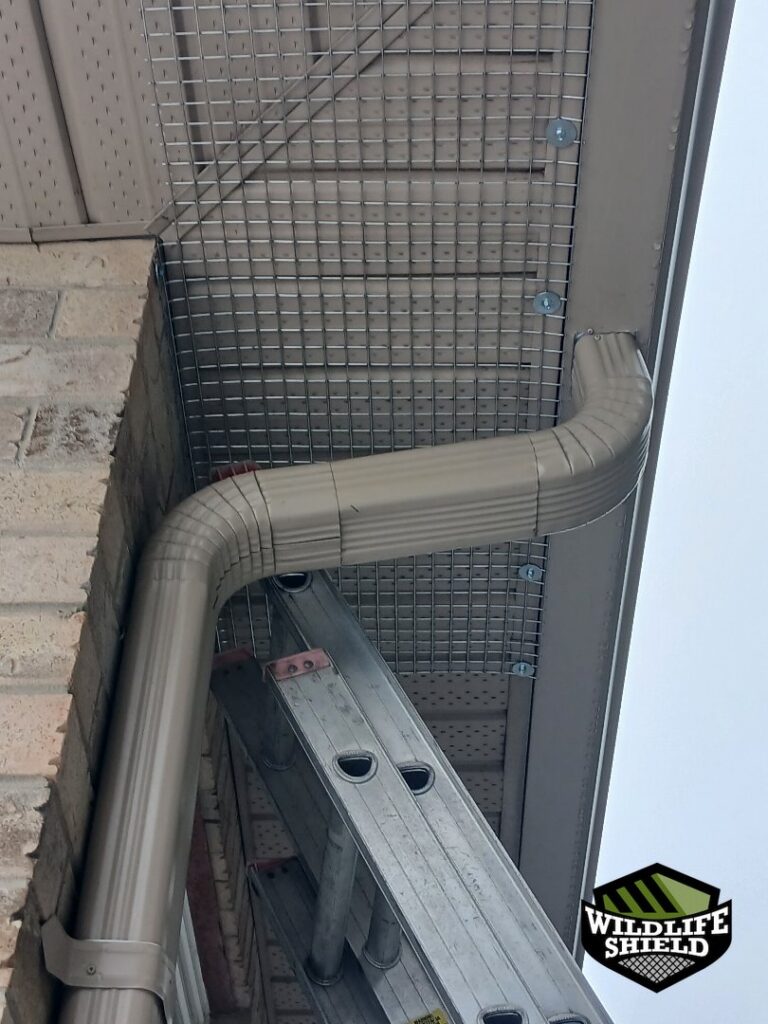
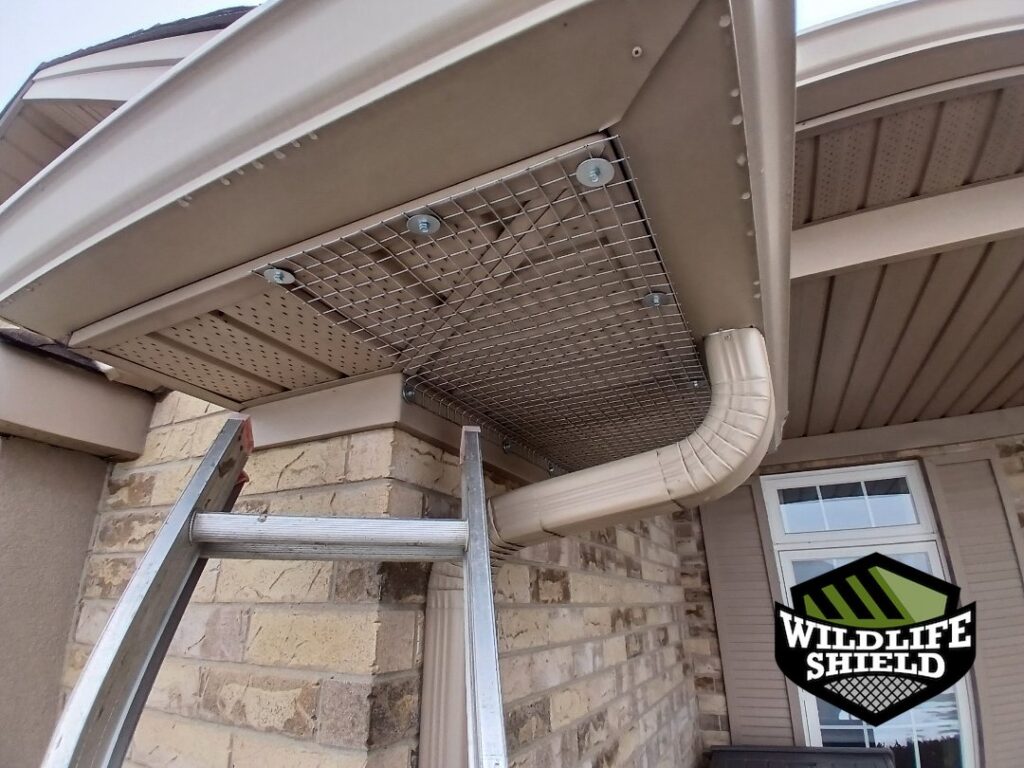
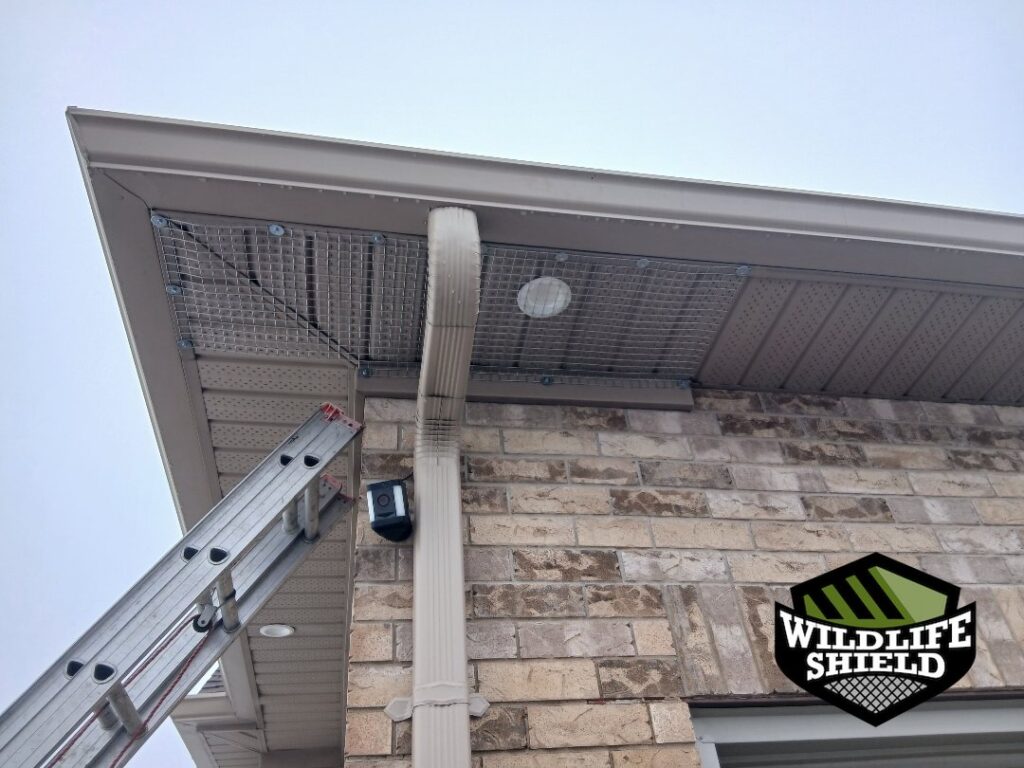
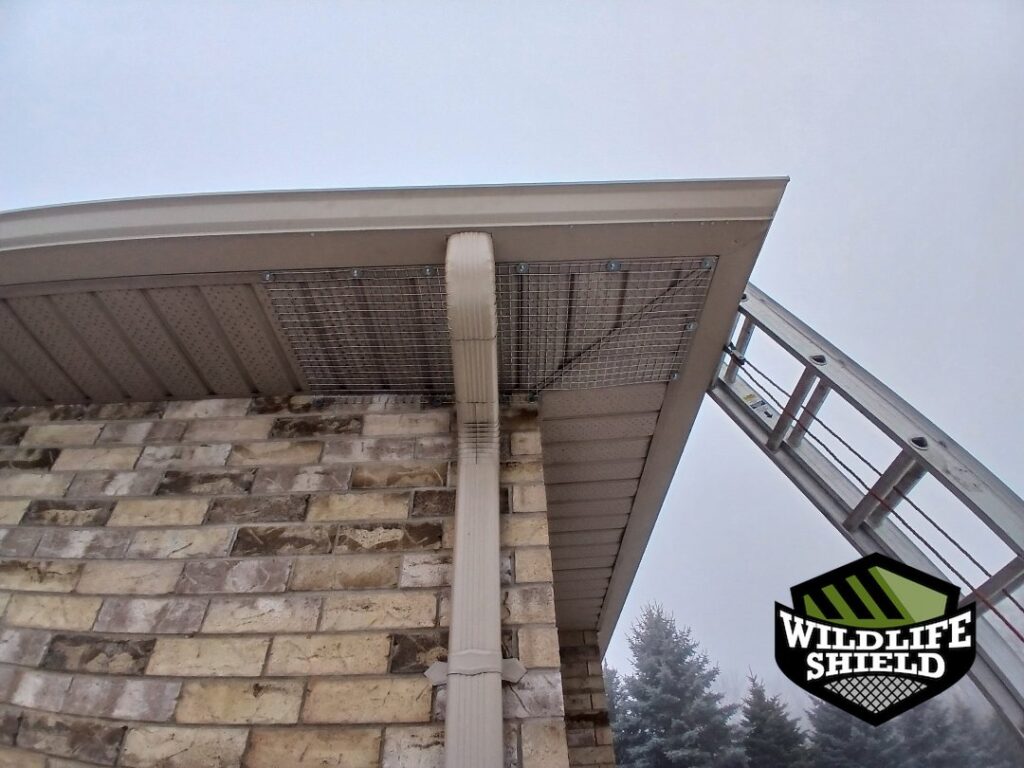
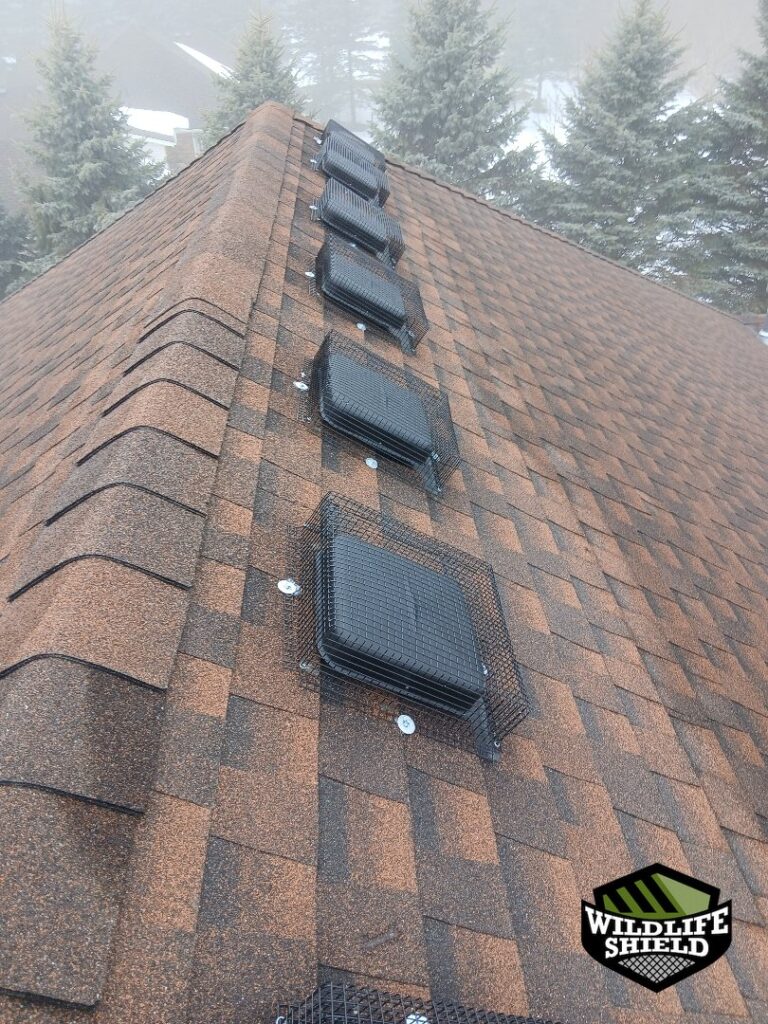
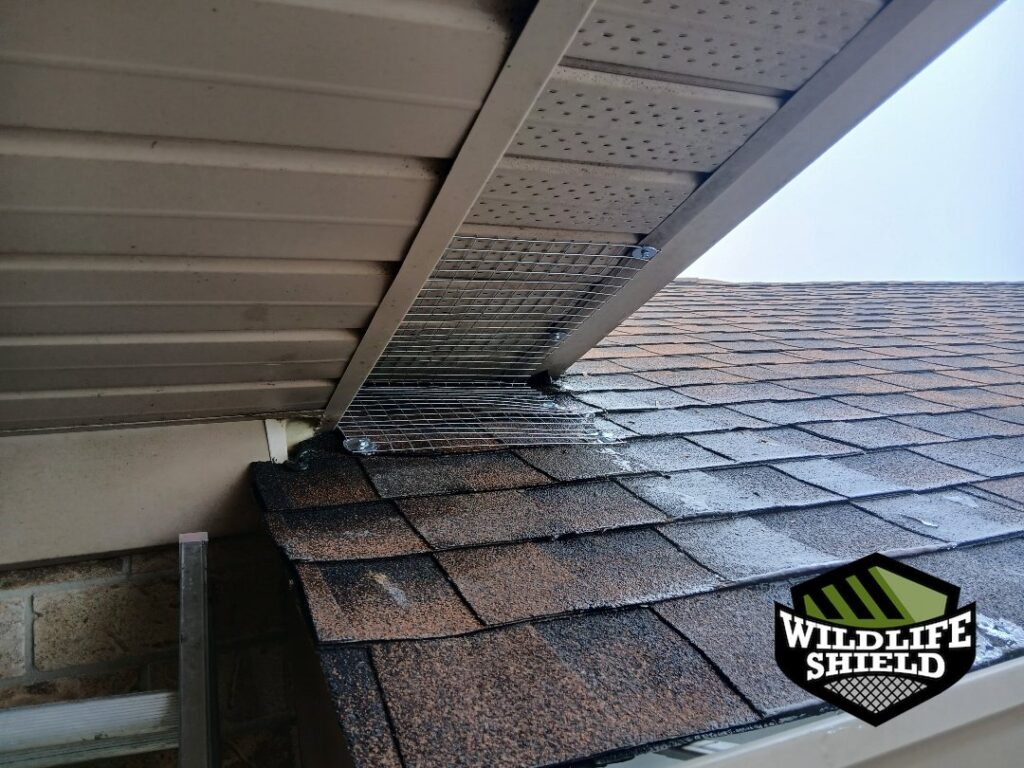
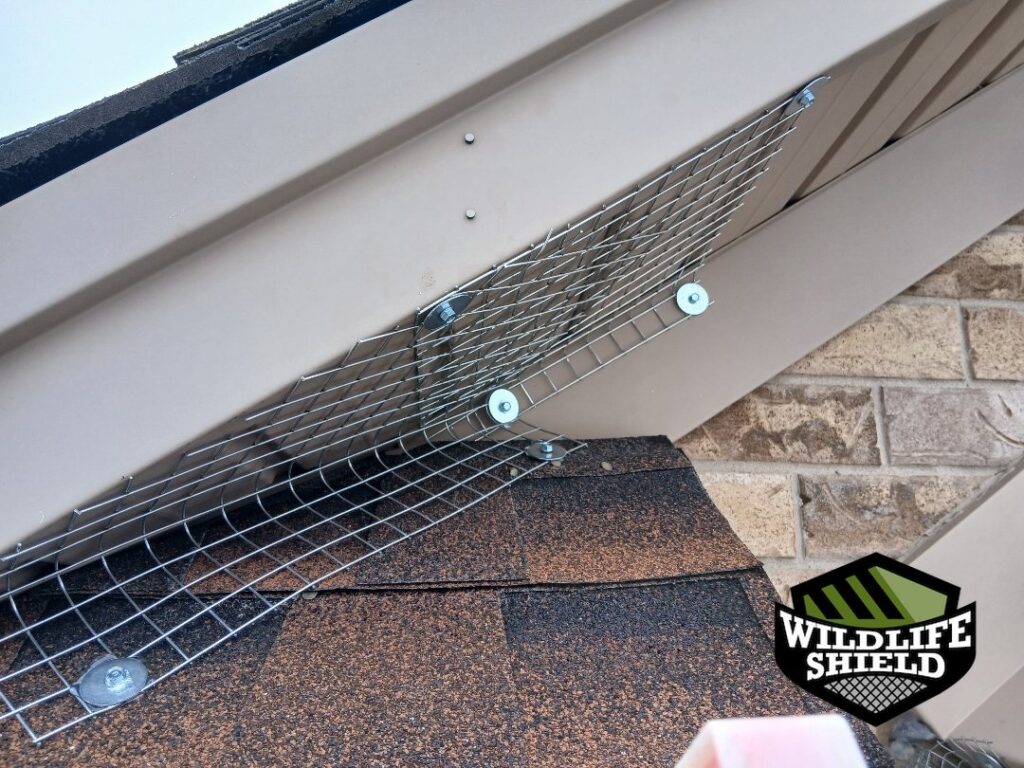
Photos taken during the service show galvanized steel mesh installed across soffit intersections and along the underside of the roof overhang. Mesh reinforcement was also installed around plumbing vent penetrations and roof vent covers to prevent wildlife from accessing the attic through these openings.
Several images show mesh panels secured beneath soffit areas and around downspout intersections where animals could otherwise reach the roofline.
Cause Analysis
Raccoons frequently access attic spaces through soffit panels because the material is relatively thin and positioned along the roof edge where animals can gain leverage. Once a section is weakened or lifted, raccoons can enlarge the opening to create a consistent access route.
Older homes with multiple roofline transitions, soffit joints, and roof penetrations often present multiple vulnerable points. These areas can be exploited by raccoons seeking sheltered nesting locations, particularly when raising young.
Treatment / Removal
A humane raccoon removal process was implemented during the first visit.
Andrew installed a one-way raccoon door over the damaged soffit entry point. This device allows animals inside the attic to exit safely while preventing re-entry.
Because the presence of young raccoons was suspected, the door system allowed the adult raccoon to relocate the babies outside the structure naturally.
The exposed entry area was disinfected following installation of the door to address contamination at the access point.
Exclusion & Repairs
After installing the one-way door, the technician completed comprehensive wildlife exclusion work across the roofline.
The following work was performed:
- Installation of a one-way raccoon door at the soffit entry point
- Installation of fifteen roof vent covers made from galvanized steel
- Two plumbing vents sealed with galvanized steel mesh
- Ten soffit intersections reinforced with galvanized steel mesh
- Four roof edge corners secured with galvanized steel mesh
- Disinfection of the main entry point
The installed mesh panels were secured tightly along soffit edges and under roof overhangs to prevent animals from lifting the material. Roof vent covers were also installed to block entry through attic ventilation openings while maintaining airflow.
Outcome & Confirmation
During the follow-up visit, the homeowner reported that attic noises had stopped.
Andrew returned to remove the one-way door after confirming that wildlife activity had ceased. The original entry point at the soffit was then permanently sealed and reinforced.
All previously installed exclusion areas were inspected to confirm secure installation. No further wildlife activity was reported inside the attic following completion of the work.
Technician Notes
Andrew identified a torn soffit panel as the primary raccoon entry point during the initial roof inspection. A one-way door was installed to allow the animals to exit the attic safely.
Preventative exclusion work was performed across the roofline to secure vulnerable areas including roof vents, plumbing vent penetrations, soffit intersections, and roof edge corners.
During the second visit, the one-way door was removed and the soffit entry point was permanently sealed. The exclusion work was inspected and confirmed secure. No further wildlife activity was reported by the homeowner.
Contact us at 519-900-1180 for all your raccoon removal, squirrel removal and wildlife removal needs in Guelph and surrounding areas.
